


Is Tonglen Dangerous?

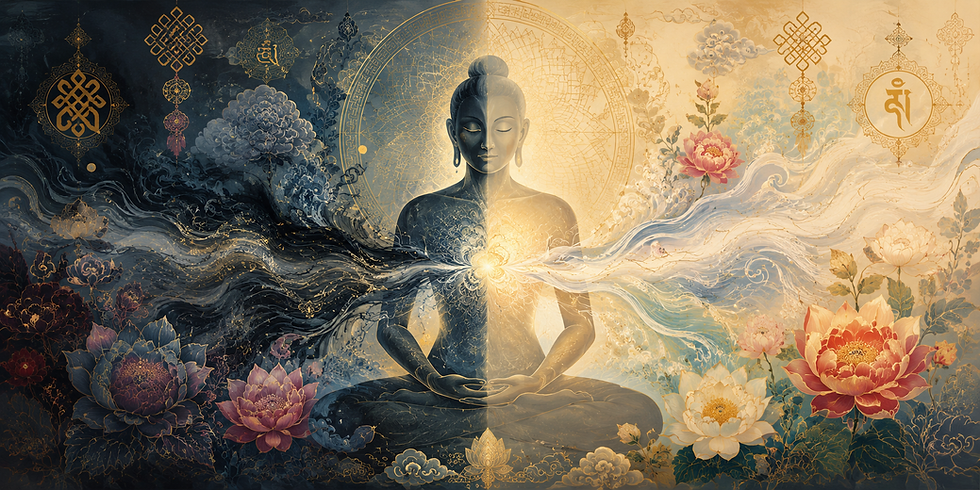
Tonglen is a Tibetan Buddhist practice that trains the mind to breathe in suffering and breathe out comfort and ease. This is, of course, the absolute opposite of what our minds habitually do. We have been trained our whole life to cling to pleasure and push suffering away. But paradoxically, this makes us suffer more.
The Tibetan practitioners realised that if we can reverse that polarity, then we become fearless. We have already accepted the painful, so when it comes it's not a problem, and we have already given away the good and pleasant, so when we lose it we're not wrong-footed.
But tonglen sounds scary, and one of the Mindsprings community reached out to ask if it were contraindicated for certain people. And if, in the wrong circumstances, it might be harmful.
This is a very important consideration for all forms of meditation. We must always test whether sustained practice is bringing us a decrease in suffering or an increase. We have to give the practices a chance to work. But after a while we are our own best judge to see if it is positive or negative for us.
That said, I find that tonglen is a wonderful and powerful practice, but I wrote a few thoughts about it down.
1) tonglen is a practice designed to reduce our fear of suffering and our fear of losing pleasant states. It is designed to build up a fearless quality which is precisely needed if we are to take the bodhisattva vow seriously. If we are afraid of suffering and desperate to cling to pleasant states, this will undermine the openness of mind needed to be with all beings - whether they are joyous, suffering, or confused.
2) tonglen is a meditation practice. That is to say, it’s a practice we do on the cushion for a fixed amount of time to explore and work with our tendencies to contract and clench in fear. It doesn’t mean we have to walk around 24/7 breathing in other people’s pain. That would
be overwhelming. We use the practice to soften our habitual patterns of constriction.
3) We are instructed to begin tonglen with ourselves. Using the breath as a superstructure, we practice breathing in (i.e. staying with) our suffering-as-it-is and letting go of our pleasure and ease. We must master this first before working with others.
4) tonglen is an experiential teaching. That is to say, when we do it, something shifts. If we think about it then we seize up because our conceptual mind solidifies the suffering, the pleasure and the Self. However, if we keep breathing in and out, in and out, then something shifts. I don’t want to say what, because it is experientially different from person to person, but we notice something about the actual nature of ’suffering’ and ‘pleasure’ rather than the concepts attached to those words.
5) We can begin with something small - the room is too cold, for example, - and breathe in the coldness as suffering and breathe out the comfort of warmth. Starting with something small builds up our confidence in the practice.
6) In the lojong slogans, it teaches that “tonglen rides the breath". This is the essential element. We are always balancing the suffering coming in with the pleasure going out. The mind is never stuck in one or the other. As soon as we have breathed coldness into us, then we are also passing warmth through our mind out away from us. This is another magic element of tonglen: nothing sticks around. The dark is always alternated with the light.
7) This is one of the ways that tonglen softens our solid, painful clenching around pain/pleasure. Because, with each breath, we are always engaging with suffering and then with ease-of-suffering, the mind can’t solidify. And over the length of a practice - say, 10 minutes - the suffering we may have begun breathing in will have changed and transformed and been replaced with new suffering; and the pleasure we have been giving away with the out breath has likewise passed through multiple changes. I have spent several rounds of tonglen breathing in my irritation with tonglen and breathing out the benefits of tonglen!
8) tonglen is about eroding the mind’s fixation on avoiding pain and grasping pleasure. It is a practice for our habituated minds. It is not a magic practice that sucks the bad energy out of another person into our bodies. Nor does it push our positive energy into other people’s bodies. Its sole purpose is to soften and relax our minds that constantly fear suffering and grasp onto pleasure.
9) One of the ways it does this is by making us aware of the insubstantial nature of ’suffering’ and ‘pleasure’ - as we breathe them in and out, over and over, they become more dreamlike, less solid. We recognise them as more a mind-creation and less a solid thing. Over time our confidence in this becomes stronger and stronger. The heart loses its armouring, and we can move to the second aspect: tonglen for others.
10) Practising tonglen with another person uses the same meditative technique. Remember this is a meditation, not a healing. You are not actually moving their suffering into your body. Nor are you magically healing their pain. What you are doing is reducing your fear and territoriality around suffering and relief. You are training the mind to welcome the difficult and give away the comforting. So if you know someone is anxious, you might breathe in their anxiety and breathe out joyful confidence. Because you are always immediately sending out the opposite quality, your mind is bathed in both the negative (each time with less fear) and the positive (each time with more free generosity).
11) Gradually, over time, our mind relaxes. Paradoxically, this meditative immersion in getting pain and losing pleasure makes us less anxious. We have already lost the precious and got the bad, so there’s nothing to fear.
This last point might address concerns about tonglen overwhelming an anxious nervous system. In my experience, it has the opposite effect. With sustained practice, starting small, starting with yourself, and then moving to others, the whole mindset of fear of suffering softens into something much more tender, humorous and fearless.
I hope these thoughts go some way to encouraging people to give the practice a go.
Please do join our 3x weekly meditation group on Zoom. We are looking at tonglen on Thursday mornings You can find the details on how to come along here:


Highlighting Canadian forum exchanges, I realized that the difference between a reliable and unreliable venue often lies in how information is presented. Some places make deposit options and game rules difficult to follow, while others provide simple and transparent guidance. In multiple threads, lloydminster casino was mentioned as a resource where clarity was prioritized. The comments were practical and realistic, giving the impression of a venue that values usability and dependable service.